
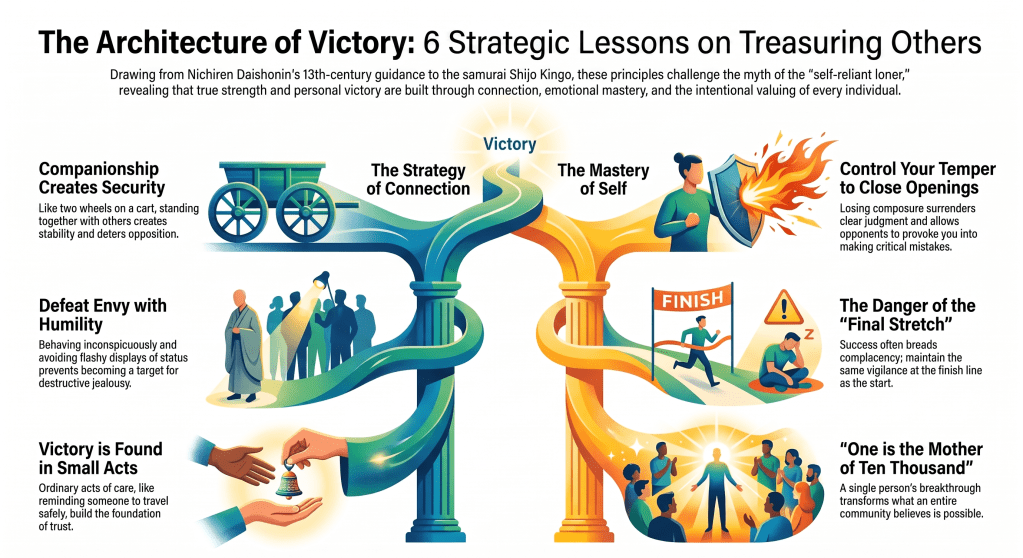
We live in an age that celebrates self-reliance. Strength is often portrayed as standing alone, pushing through challenges without help, and depending on no one but ourselves.
Yet history, human experience, and Buddhist philosophy point to a different truth: isolation is not strength. It is vulnerability.
Nichiren Daishonin’s teaching of treasuring each person offers an alternative vision. Drawing on guidance he gave to the samurai Shijo Kingo during a time of grave danger, we find an unexpected lesson: the surest path to personal victory is not self-protection through separation, but through connection.
What follows are five surprising principles that reveal why valuing others may be one of the most powerful forms of protection and strength.
1. Personal Safety Depends on Partnership
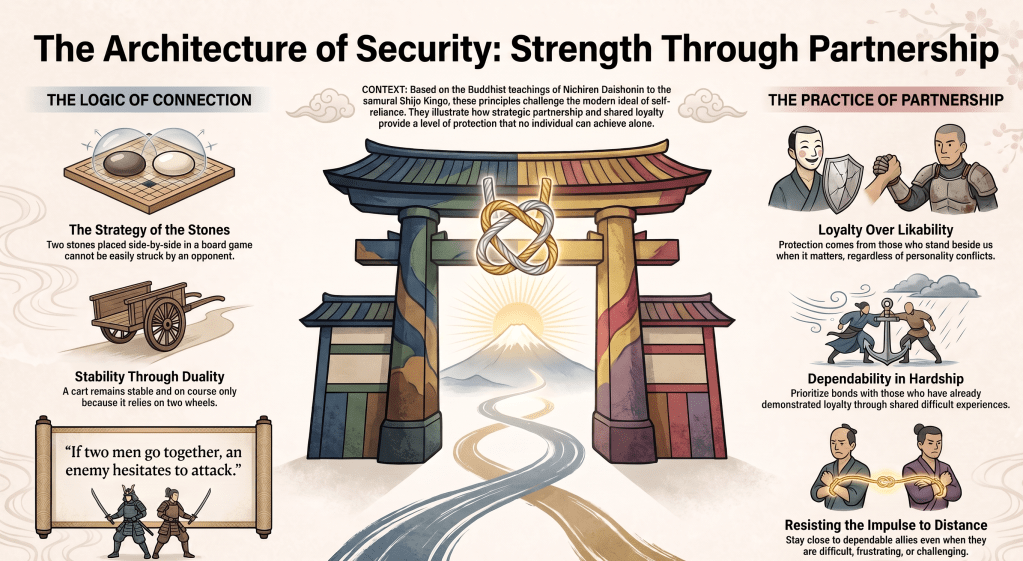
When we’re convinced we’re right, it can be tempting to distance ourselves from people who frustrate us or challenge us. But Nichiren warned against this impulse.
Using an analogy from the board games of his day, he explained that two stones placed together cannot easily be struck by an opponent. Likewise, a cart remains stable only because it has two wheels.
His point was simple: companionship creates security.
Nichiren urged Shijo Kingo to stay close to fellow practitioners, even those he found difficult. These individuals had already demonstrated their loyalty through shared hardship. They were imperfect, but they were dependable.
As he wrote:
“If two men go together, an enemy hesitates to attack.”
In a culture that prizes independence, this is a counterintuitive lesson. The people who protect us most are not always those we like best, but those who stand beside us when it matters most.
2. Losing Your Temper Helps Your Opponents
Most of us justify our anger. We see it as a natural response to unfairness or provocation.
Nichiren saw it differently.
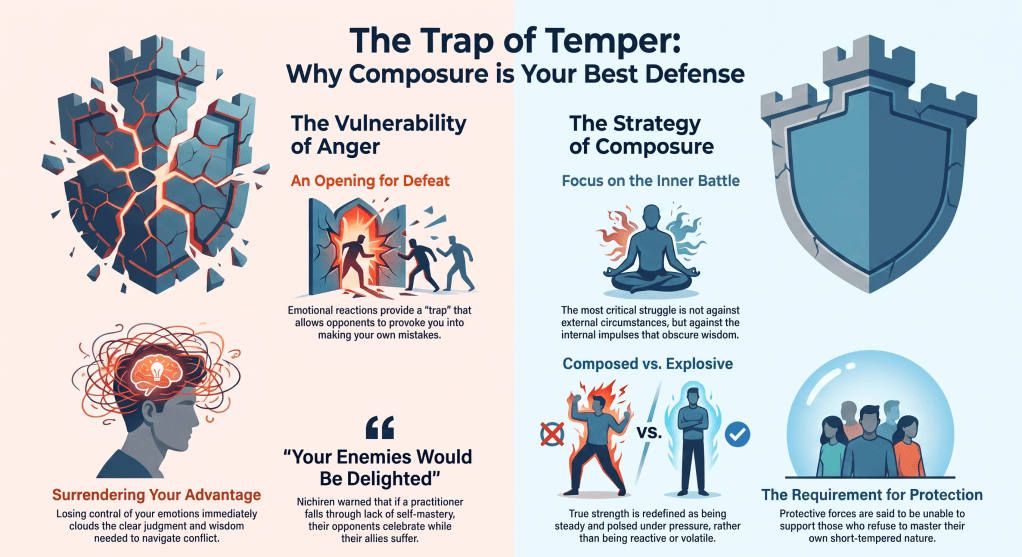
He repeatedly cautioned Kingo about his quick temper, warning that emotional reactions could become an opening for defeat. An enemy does not always attack directly. Often, they seek to provoke us into making mistakes ourselves.
When we lose control, we surrender our greatest advantage: clear judgment.
Nichiren even warned that if Kingo fell because he could not master his emotions, his opponents would celebrate while his allies would suffer.
The deeper battle, then, is not against external circumstances but against the impulses within us that cloud our wisdom.
True strength is not explosive. It is composed.
3. Humility Can Be a Strategic Advantage
We often associate courage with boldness and visibility. But there are moments when wisdom calls for something else.
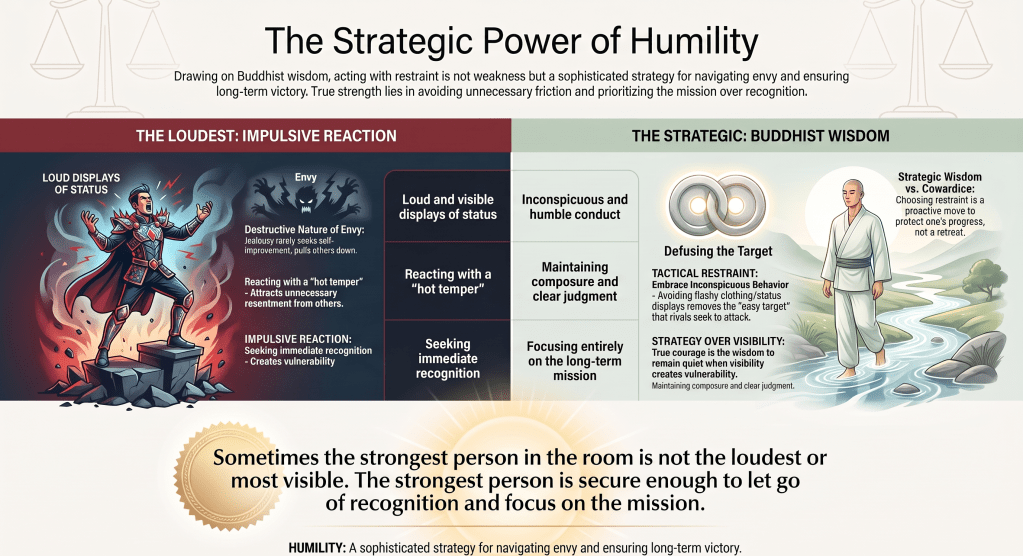
Nichiren advised the high-ranking samurai Kingo to behave inconspicuously. He encouraged him to avoid flashy clothing, unnecessary displays of status, and anything that might attract resentment.
Why?
Because envy can be destructive.
Jealousy rarely seeks to improve itself. More often, it tries to pull others down. By acting with humility and restraint, Kingo could avoid becoming an easy target.
This wasn’t cowardice. It was strategic wisdom.
Sometimes the strongest person in the room is not the loudest or most visible. Sometimes it is the one secure enough to let go of recognition and focus entirely on the mission ahead.
4. Greatness Is Revealed in Small Acts
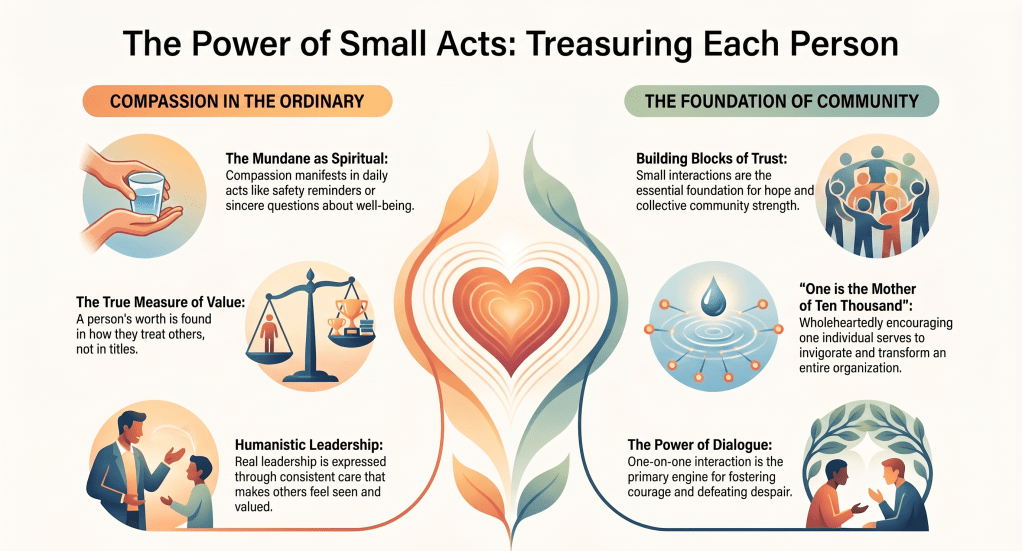
Many people look for spirituality in dramatic experiences, profound words, or grand achievements.
Yet one of the most humanistic insights in Nichiren Buddhism is that compassion shows itself in ordinary moments.
A reminder to drive safely.
A word of encouragement to someone who is struggling.
A sincere question about another person’s well-being.
These small interactions can seem insignificant, but they are the building blocks of trust, hope, and community.
Daisaku Ikeda often emphasized that the true measure of a person is not found in titles or status, but in how they treat others.
Real leadership is revealed in the details.
It is expressed through consistent acts of care that help others feel seen, respected, and valued.
5. Success Is Often the Most Dangerous Moment
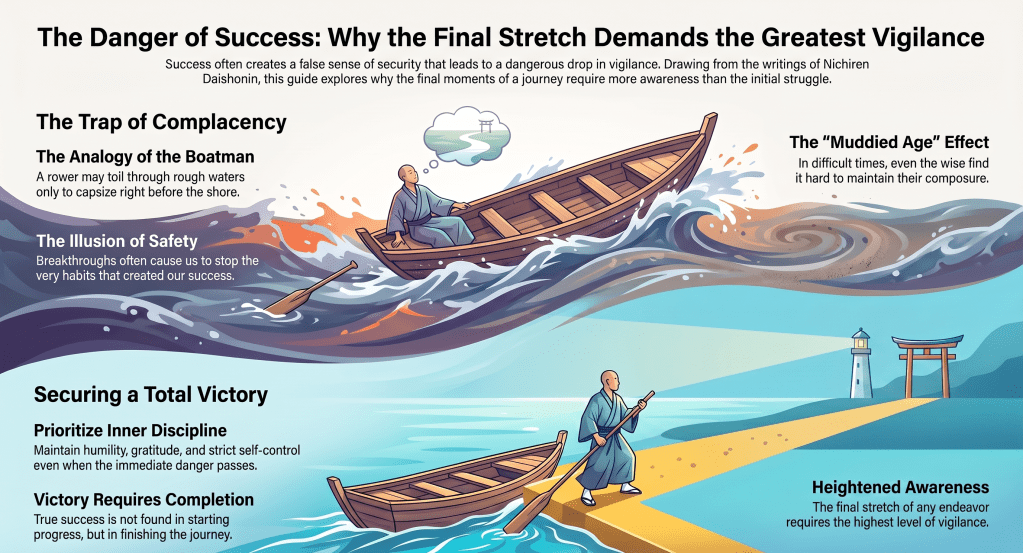
Most people expect challenges during times of struggle.
Few expect them after a breakthrough.
Nichiren compared this danger to a boatman who rows tirelessly across rough waters, only to capsize just before reaching shore.
The lesson is timeless.
Success can create complacency. Once the immediate danger appears to have passed, we relax our vigilance. We stop doing the very things that helped us succeed in the first place.
Humility, discipline, and gratitude become easier to neglect.
Yet victory is not secured when progress begins. It is secured when we finish the journey.
The final stretch often requires the greatest awareness.
The Ripple Effect of One Person’s Victory
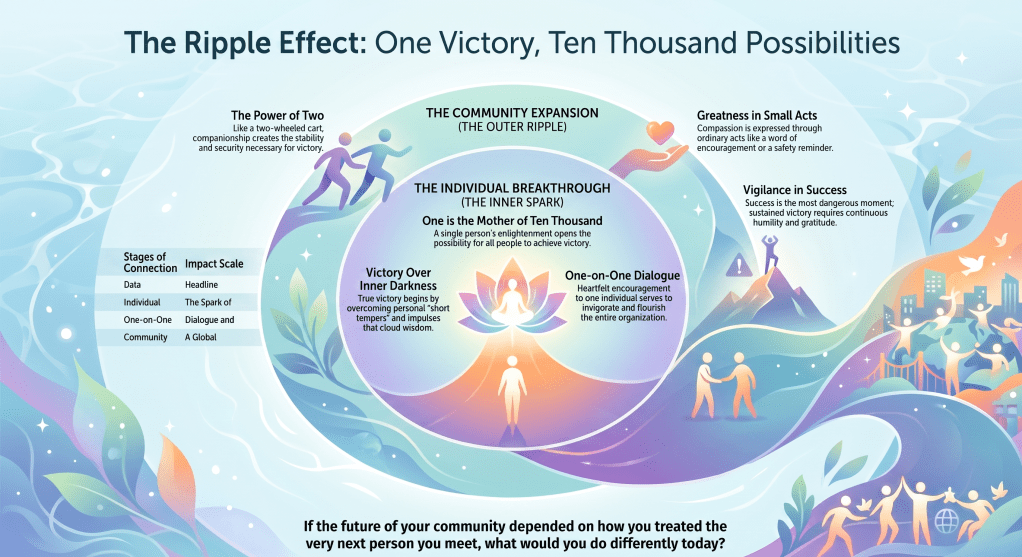
Nichiren Buddhism teaches that “one is the mother of ten thousand.”
In other words, a single person’s breakthrough can open possibilities for countless others.
The story of the Dragon King’s daughter illustrates this principle. Her attainment of enlightenment was not merely a personal achievement. It transformed what others believed was possible.
Our lives work in much the same way.
Every interaction strengthens or weakens the fabric of our communities. Every act of encouragement, patience, and respect creates a ripple effect that extends far beyond what we can see.
In today’s fragmented world, treasuring each person is more than a moral ideal. It is a practical strategy for building resilient relationships, strong communities, and enduring victories.
Perhaps the question is not whether other people matter to our success.
Perhaps the question is this:
If the future of your community depended on how you treated the very next person you meet, what would you do differently today?
